

The 10th #1 Album
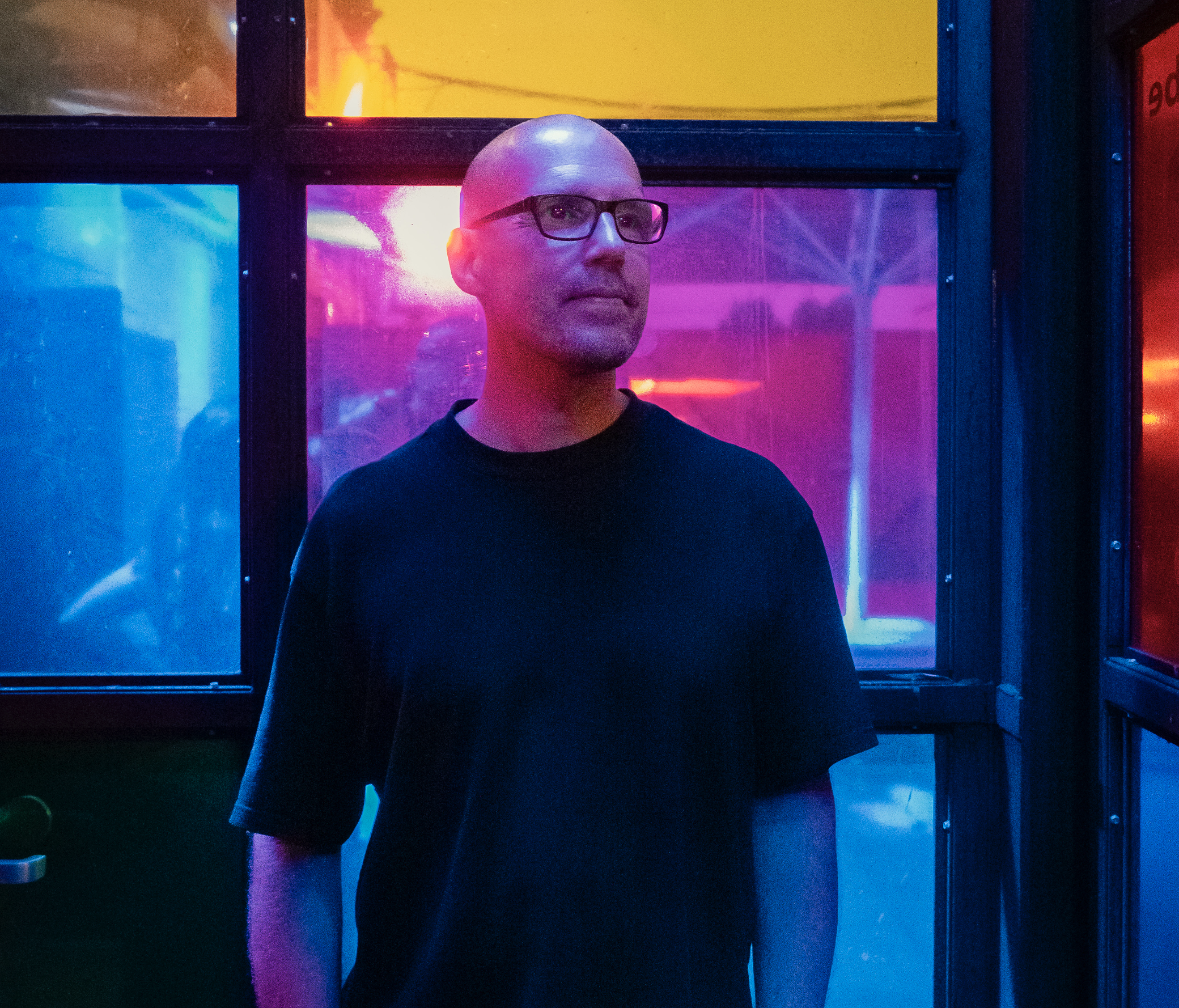
“Euphoria ist ein Album FÜR Momente, in denen alles ein bisschen leichter wird.
In unsicheren Zeiten soll es dir helfen, den Blick auf das SCHÖNE zu richten.”
— SCHILLER

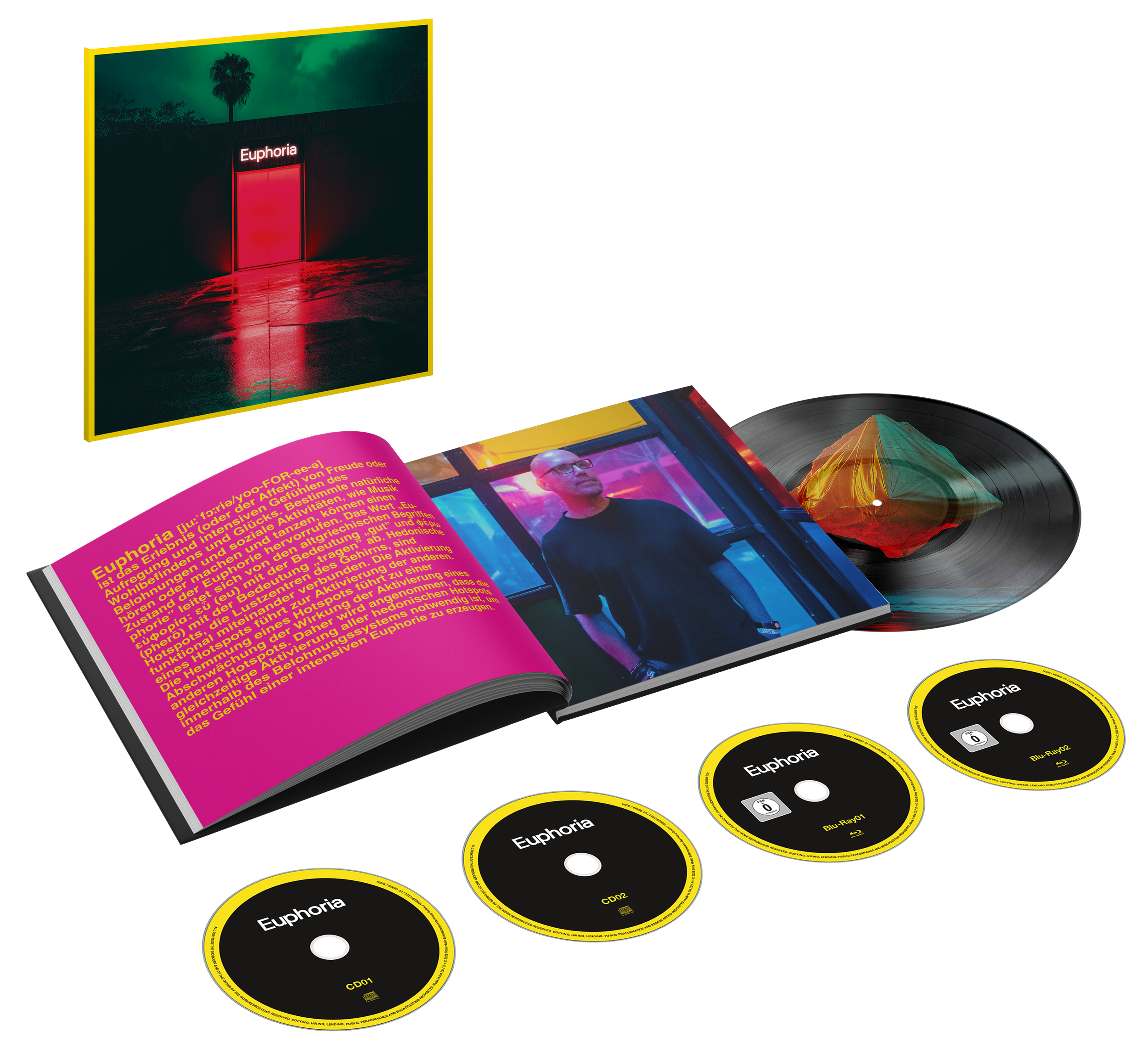
DEINE Ultimative
Collector’s Edition
Erlebe „Euphoria” in der aufwendig gestalteten Premium Deluxe Edition.
Das 32 x 32 cm große Hardcover-Buch enthält auf 2 CDs, 2 Blu-Rays und einer Picture-Disc Vinyl das komplette neue Werk von SCHILLER. 100% Made in Germany.
Mehr als 600 MInuten Spielzeit:
Die Limitierte Premium Deluxe Edition
-
Audio
• Euphoria – Das komplette Album
• Live at the Baltic Sea – Das Open Air Live-Album
• Rapture I-IV – Limited Picture-Disc Vinyl inkl. Download-Code
Konzertfilme
• Illuminate: Live in Frankfurt (◗◖ Dolby Atmos)
• Illuminate: Live in Berlin – Die Highlights (◗◖ Dolby Atmos)
• Music Discovery Project x hr Sinfonieorchester (◗◖ Dolby Atmos)
• Wanderlust – Die Highlights der Clubtour
• The Kyiv Concert – Die Highlights
SCHILLER Originals
• Taktwechsel – Länge: 45 Minuten
• Berlin Kyiv – Länge: 50 Minuten
• Bitola – Länge: 14 Minuten
• Underground – Länge: 9 Minuten
Featurettes
• Euphoria • World Club Dome • Sommertraum • Live in Gdansk • Bootshaus Cologne • Malaga • Chernivtsi • Mannheim • Bitola • Wanderlust • Kyiv • Mainz • Motorworld Cologne • Seebühne Bremen • Nature One
Extras
• Wall Of Friends
• Galleries: Illuminate • Wanderlust • Bootshaus
Länge: > 600 Minuten
4 CONCERTS
-
In der Jahrhunderthalle Frankfurt verwandelt SCHILLER „Illuminate“ in ein einziges großes Eintauchen aus Klang und Licht.
Weite Synth-Flächen, tiefer, warmer Bass und schwebende Melodien bauen sich Schicht für Schicht auf, während Licht und Laser die Bühne in ständig wechselnde Farben tauchen – mal hypnotisch-blau, mal gleißend-gold.
Die Show fühlt sich weniger wie ein Konzert und mehr wie eine Reise an: treibende Beats, bei denen die ganze Halle pulsiert, wechseln sich ab mit ruhigen, fast filmischen Momenten, in denen man Gänsehaut bekommt und einfach nur da sein will.
Live-Drums, Gitarren und phantastische Gastkünstler geben der elektronischen Welt etwas sehr Menschliches.
-
In der Mercedes-Benz (heute Uber) Arena in Berlin entfaltet SCHILLER mit „Illuminate“ eine Show, die eher wie ein filmischer Traum als ein klassisches Konzert wirkt.
Synth-Sequenzen und ein warmer, pulsierender Bass füllen die riesige Arena, während sich die Bühne in ein Meer aus Laserlinien und warmen Farben verwandelt.
Die treibenden Tracks, bei denen die Ränge kollektiv mitwippen, wechseln sich ab mit stillen, sphärischen Momenten, in denen man fast vergisst, dass man in einer Arena sitzt – alles wirkt plötzlich ganz nah und intim. Live-Drums, Gitarren und markante Gastkünstler geben den elektronischen Klangwelten eine menschliche Tiefe, die direkt unter die Haut geht.
-
SCHILLER trifft auf das hr-Sinfonieorchester – beim Music Discovery Project verschmelzen elektronische Klangwelten und sinfonische Wucht zu einem Erlebnis, das sich wie ein Live-Soundtrack fürs eigene Leben anfühlt.
Die vertrauten SCHILLER-Melodien werden vom Orchester groß aufgefächert: Streicher, die sich wie Wellen auftürmen, mächtige Bläser, dezente Harfenklänge – und mittendrin die warmen Synth-Flächen und Beats, die alles zusammenhalten. Mal treibend und episch, mal flüsterleise und zerbrechlich entstehen Momente, in denen man Gänsehaut bekommt und gleichzeitig neugierig lauscht, wie dieser Sound im nächsten Stück weitergedacht wird.
-
Im legendären Gibson in Frankfurt zeigt SCHILLER mit dem „Wanderlust“ Club Konzert die pure elektronische Seite – direkt und intensiv.
Der Bass drückt warm durch den Raum, Sequenzen flirren, Synth-Linien bauen sich wie Wellen auf, bis der ganze Club im gleichen Puls atmet. Es ist diese Mischung aus hypnotischem Flow und plötzlichen, euphorischen Peaks, bei denen die Menge explodiert und man kurz alles um sich herum vergisst.
Besonders magisch: die Visuals, die exklusiv für dieses Konzert entstanden sind. Projektionen, die wie lebende Gemälde über Wände und Köpfe gleiten – abstrakte Landschaften, Lichtfragmente, fließende Formen, die sich perfekt an die Musik schmiegen und das Gefühl von „Wanderlust“ sichtbar machen.
Am Ende fühlt sich der Abend an wie eine nächtliche Reise: Man kam in einen Club – und ging mit dem Gefühl, gemeinsam einen geheimen, elektronischen Kosmos betreten zu haben.
4 Originals
-
„Taktwechsel“ gewährt exklusive Einblicke in den kreativen Entstehungsprozess der „Music Discovery Project“-Konzerte von SCHILLER und dem hr-Sinfonieorchester in der ausverkauften Jahrhunderthalle Frankfurt.
Die Dokumentation begleitet Musiker, Dirigent und Kreativteam von den ersten Proben über inspirierende Gespräche und klangliche Experimente bis hin zum mitreißenden Live-Moment auf der Bühne.
So entsteht ein atmosphärisch dichtes Porträt, das zeigt, mit welcher Leidenschaft, Präzision und Innovationskraft aus einer Vision ein außergewöhnliches Konzerterlebnis wird.
-
„Berlin Kyiv“ begleitet SCHILLER auf einer besonderen Konzertreise in die Ukraine – mit intensiven Eindrücken von der Zugfahrt von Berlin nach Lviv und weiter nach Kyiv.
Zwischen Abschied und Ankunft, Soundcheck und Begegnungen entsteht ein ebenso emotionales wie hoffnungsvolles Stimmungsbild, das die Atmosphäre dieser außergewöhnlichen Zeit für alle Beteiligten spürbar macht.
Die Dokumentation eröffent äußerst persönliche Einblicke in die Welt von SCHILLER – nah, unverstellt und berührend – und zeigt, wie Musik selbst in herausfordernden Momenten Verbindungen schafft und Zuversicht entstehen lässt.
-
„Bitola“ begleitet SCHILLER nach Nordmazedonien und öffnet die Türen zu einem außergewöhnlichen Konzert in der malerischen Stadt Bitola.
Die Dokumentation zeigt exklusive Behind-the-Scenes-Momente – von den ersten Proben mit dem Bitola Chamber Orchestra über die klangliche Feinarbeit bis hin zur besonderen Open-Air Atmosphäre am Konzertabend im gigantischen Stadion.
So entsteht ein faszinierender Blick auf die Entstehung eines sehr besonderen musikalischen Ereignisses, das Landschaft, Kultur und Musik zu einem intensiven Gesamterlebnis verbindet.
-
Tief unter der Erde, wo Licht und Klang auf magische Weise verschmelzen, entstanden unvergessliche Momente: SCHILLER: „Underground” nimmt Dich mit 500 Meter unter die Oberfläche – ins Bergwerk Merkers – und gewährt exklusive Einblicke hinter die Kulissen eines der außergewöhnlichsten SCHILLER-Konzerte aller Zeiten.
Von der ersten Fahrt ins unterirdische Labyrinth bis zu den emotionalen Höhepunkten des Abends – diese aufwendig produzierte Dokumentation zeigt die intensive Vorbereitung, technische Meisterleistung und kreative Vision, die diesen besonderen Ort in eine gigantische Klangkathedrale verwandelten.
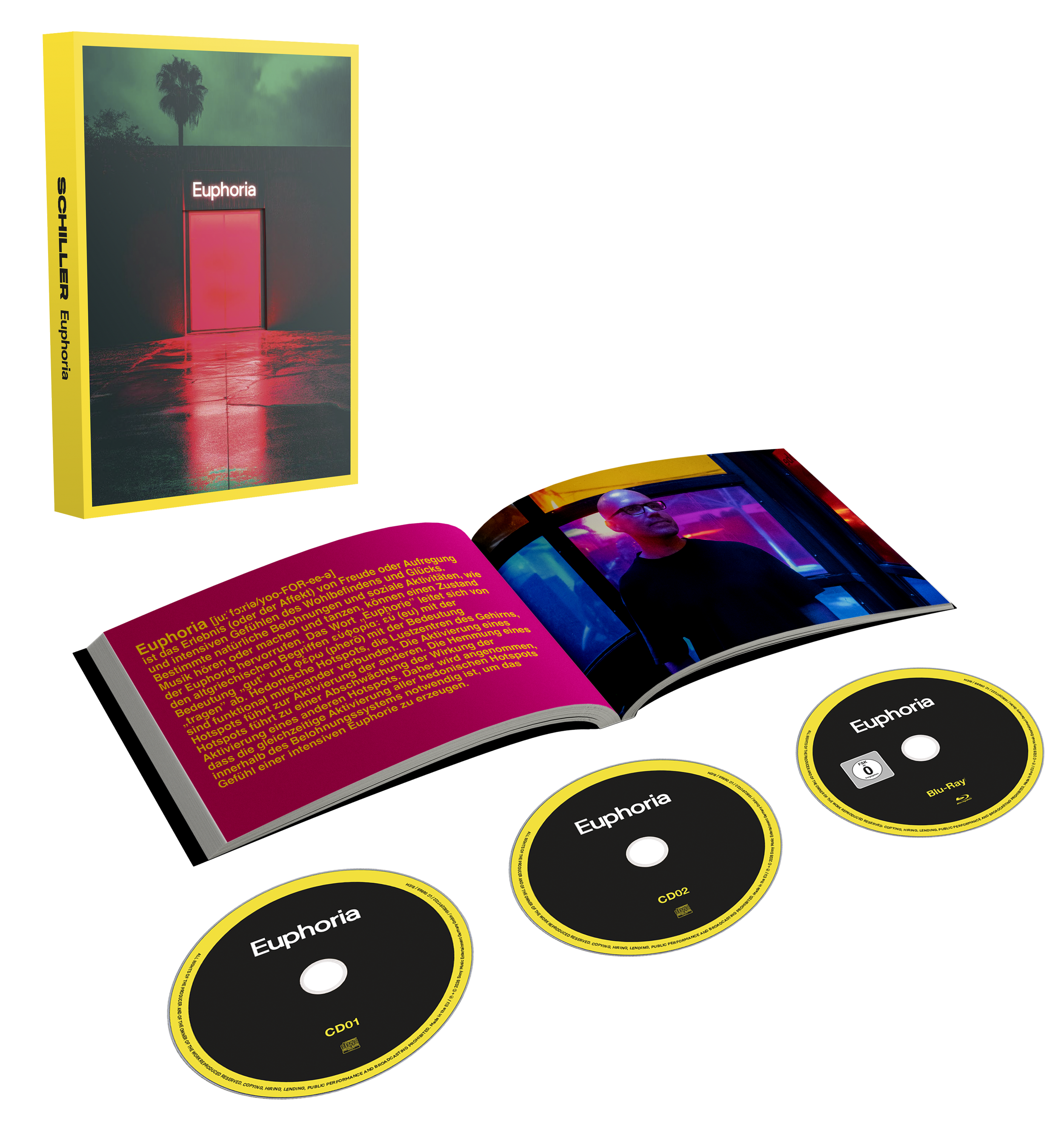
Das Klassische
Box-Set
DIE Limitierte Super Deluxe Edition
Das Hardcover-Buch im Schuber enthält auf 2 CDs und 1 Blu-Ray die Essenz von „Euphoria”.
-
Audio
• Euphoria – Das komplette Album
• Live at the Baltic Sea – Das Open Air Live-Album
Konzertfilme
• Illuminate: Live in Frankfurt (◗◖ Dolby Atmos)
• Music Discovery Project x hr Sinfonieorchester (◗◖ Dolby Atmos)
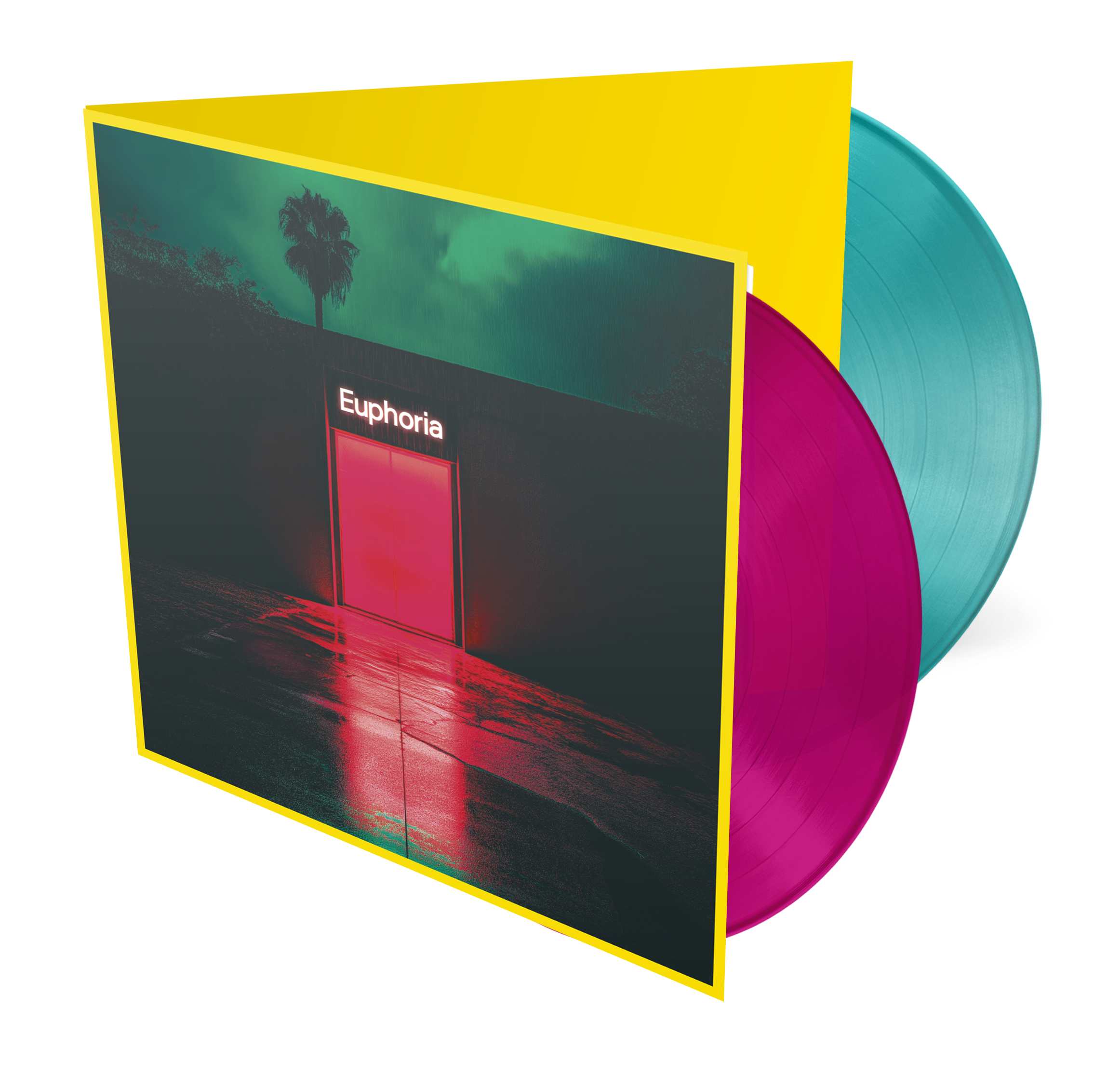
DIE SCHALLPLATTE
Limitierte 180 gramm Doppel-Vinyl
Das komplette Album „Euphoria” auf einer farbigen Doppelvinyl.
100% Made in Germany.

SCHILLER x JULIA SANINA
„MY SILENCE”
RELEASES
WELCOME TO THE
WORLD OF EUPHORIA
Euphoria. A name that feels almost defiant these days. A word that pushes back against the tone of the present. Because euphoria—that sounds like radiance, like departure, like that luminous surplus of life that has slipped from our grasp. We live in turbulent times, say the news, the speeches, the headlines. But what, exactly, is moving? And where to? At times it seems as if everything is motion without direction. A constant circling, a droning with neither beginning nor end.
The world is growing ever more complex, we are told. But perhaps that only means we have lost the courage to simply see it. Instead, we map it with concepts, with numbers, with moral coordinates—until it dissolves under the weight of analysis itself.
So why did I call this album Euphoria?
Strictly speaking, there is no reason at all. Euphoria does not fit our present moment—no more than confidence or trust do. Believing in the good has gone out of fashion, because one does not want to make a fool of oneself. Irony is the protective coating of our time. Euphoria, by contrast, is naked. It wants to be seen, wants to believe, wants to shine—and that is precisely what makes it suspect.
But perhaps that is the point. Perhaps what we need right now is to reclaim the feeling. A moment of excess that does not apologize. Euphoria is not a naïve dream of happiness. It is an attempt to set something against cynicism. A gesture of sincerity.
For without freedom, there is no happiness.
But what has happened to our freedom? Where has it gone—that inner expanse, that untamed trust in one’s own being? Many people feel surrounded: by prohibitions, regulations, control, by the paralyzing certainty that everything has already been decided before one even begins to think.
And yet freedom is everything—and everything without freedom is nothing. Today, this truth sounds almost pathetical, as if one were speaking of a distant age. Freedom is not a fixed possession; it is a delicate balance. It demands risk, uncertainty, the possibility of failure. And that, precisely, seems to be slipping away in a world that mistakes security for meaning.
We regulate in order to protect—and in doing so, we lose what we meant to protect. We measure the world until it has no secrets left. We design guardrails meant to spare us from mistakes, and fail to notice that they also shield us from passion.
What remains when everything is regulated?
Perhaps only a longing for the unpredictable. For the moment in which one forgets oneself. Music can still do this—it can tear us out of predictability. It can remind us that freedom is not a concept, but a feeling.
In this sense, Euphoria is an attempt at a counter-design—not a dogmatic statement, but a poetic revolt. A celebration of being alive. It does not seek duration, but intensity. Those seconds in which one feels that one is not merely functioning, but truly existing.
Euphoria is not a permanent state. It is a flash. A sudden illumination that shows how bright the world could be, if we would let it. Within it always resonates the melancholy of disappearance. For every euphoric moment already carries the knowledge that it will pass. Perhaps that is precisely its beauty: it forces us to be attentive.
Many have forgotten how to surrender themselves. The fear of loss has grown stronger than the desire for life. We hold on, control, plan—and then wonder why nothing surprises us anymore. But life is not a project plan. It needs ruptures, leaps, coincidences. Euphoria arises where something unforeseen occurs, where we open ourselves to the unknown.
Perhaps Euphoria is a plea to allow ourselves to be seduced again—by a sound, a glance, a thought. Seduction not as weakness, but as an expression of freedom. For those who cannot be seduced remain untouched. And those who remain untouched pass life by.
We surround ourselves with filters and rules meant to protect us—from disappointment, from error, from pain. But all of this also protects us from the possibility of happiness. And what kind of protection is that, which keeps us at a distance from life?
Freedom begins where one is willing to lose oneself. In a moment, in a melody, in a feeling. Euphoria wants to create such moments—not to escape, but to remember. To remember that within ourselves we carry a space larger than the world around us.
The world is loud, contradictory, torn apart. And yet—sometimes, when a sound fades, when silence settles, when a thought loosens—one feels something greater than fear. Then one senses that beneath the layer of rules something else is alive: a longing for lightness, for closeness, for the first breath of the morning.
Welcome, then, to the world of Euphoria.
A world that does not claim to understand everything, but dares to feel everything.
A world that pushes back against the gravity of reason.
A world that reminds us that even in chaos, a spark of beauty glows—if only we allow it.
ABOUT: FREEDOM
Freedom is uncomfortable.
It scratches, it demands, it does not leave us alone. Freedom is not a warm blanket you can hide under, not a cozy state you reach once and then get to keep. It is, rather, constant motion—an inner vibration, a quiet unease that reminds us that nothing in life is self-evident.
And yet we treat it as if it were. Freedom has become so ordinary to us that we barely feel it anymore. We breathe it in without gratitude. We move within it without respect. We take it for a natural right, not an achievement. And yet it is fragile—delicate like a soap bubble that needs only a breath of indifference to burst.
In our time, freedom is often confused with comfort. We believe we are free when we can choose at any moment from countless options. But freedom of choice is not the same as inner freedom. One is based on consumption, the other on courage. We surf through possibilities instead of making decisions. We scroll, we click, we trade risk for reassurance—and barely notice how the comfortable life slowly binds us.
Of course—and this is the paradox—freedom also includes the freedom to choose comfort. No one forces us to be free. We are allowed to trade independence for security. That, too, is part of individual freedom: the right to make that decision ourselves. And perhaps this is precisely what makes freedom so difficult. It demands that we constantly ask whether we are still living it—or have already lost it.
I catch myself doing this—domesticating my own freedom. Especially my artistic freedom. There is this quiet pressure to repeat oneself, not to unsettle. The desire to meet expectations. The need for approval. And yet—this is exactly where the danger begins. Anyone who limits their freedom out of fear of rejection betrays themselves. Art that insures itself too carefully loses its soul. Freedom needs risk. It needs the open field, the leap into uncertainty, the possibility of failure.
Freedom and security exist in an endless conflict of goals. They are like two forces that attract and repel each other at the same time. Security offers stability; freedom offers movement. Security gives calm; freedom gives meaning. Whoever wants only one will lose the other. It is a choice that each of us must make again and again—daily, consciously, often painfully.
On my travels I meet people for whom freedom is not a theory, but a necessity. People who organize their lives around it, even when the price is high. They give up possessions, comfort, stability—but they keep their dreams. In their eyes there is a determination I rarely see in our societies anymore. Perhaps because they know what it means to be unfree.
From them I learn that freedom is not a condition, but an attitude. It begins where one says no—to patronization, to fear, to self-denial. It lives on doubt, but also on the clarity of wanting to shape one’s own life. Freedom demands that you endure yourself, with all your contradictions.
We should stop treating freedom as something that is simply given to us. It is not something you possess—it is something you do. In our decisions, in our words, in our courage to be different. Freedom means trusting your own thinking, even when the majority says something else. It means shifting boundaries—not only external ones, but internal ones as well.
Perhaps it is time to allow a little more unrest again. A little more friction, a little more risk. We could begin to question the comfortable securities that numb us. We could learn to see uncertainty not as a threat, but as a sign of being alive. Because those who want to secure everything in the end lose what life is made of: the open, the unplannable, the free.
So let us simply try, together, to dare a little more freedom. Not as a slogan, but as a daily practice. Freedom is uncomfortable—yes. But precisely in that discomfort lies its beauty. It forces us to stay awake, to think, to feel. It keeps us alive.
And perhaps that is the greatest task of our time: not to become more comfortable, but freer. Free in thought, free in feeling, free in action. Free to swim against the current, free to remain true to ourselves.
Because in the end, freedom is not the goal—it is the path. And only those who walk it feel what it means to truly live. Perhaps true freedom begins exactly where fear ends—and courage begins.
THANK YOU
There is no map for the path we’ve taken.
No line running straight through the years.
Rather, it’s a delicate weave of moments, encounters, sounds.
A trail made of light and memory.
When I look back today, I don’t see milestones—I see movement.
A wandering, a searching, a continuing onward.
SCHILLER was never a destination.
SCHILLER has always been a journey.
A journey through soundscapes, through cities and nights, through times that have changed, and through people who have remained.
Many of you have been with me since the very first tones.
Others joined later—curious, open, ready to step into the unknown.
You listened, you felt, you trusted.
You walked with me when the music grew quieter, and you stayed when it transformed.
You understood that this journey is not about repetition, but about constant becoming.
For that, I thank you. From the bottom of my heart.
What always moves me is your courage to embrace the new.
Because every album, every concert, every experiment carries a risk—the risk that the next sound will be different from the last.
But that is exactly where life resides: in movement, in change, in the constant transformation of tones.
You carried this path with me, felt it with me, breathed it with me.
You were there when it was bright—and also when it grew quiet.
Without your curiosity, without your loyalty, SCHILLER would be just a name.
With you, it is a living encounter.
I often think about how it all began—with a sound, an idea, a feeling larger than words.
Today, many years and many stages later, I feel it clearly: the essence has remained.
This longing for connection, for that moment when music and people become one, when time dissolves and only the now exists.
Those moments when you feel: this is real.
That is why I live this music.
And for you, who listen to it, carry it, and continue to think it forward.
The journey has been long, and it has left traces—not only in the albums, but also in me.
Every encounter, every concert, every night on the tour bus, every sunrise after a long drive is part of this path.
And yet it doesn’t feel like a look back, but like a movement forward.
Because nothing stands still.
Everything transforms, everything continues to resonate.
Perhaps that is the most beautiful part of this journey: knowing that every farewell is also a beginning.
And so I sometimes ask myself: what does the future mean?
Maybe it’s not a distant place, but a state of being.
A quiet trust that things will go on—different, but with the same heartbeat.
The future is not a line stretching out before us.
It is a breath.
A rhythm that calls to us.
It comes into being the moment we are ready to open ourselves to the unknown.
I believe the future does not belong to those who plan everything, but to those who remain open.
Open to new sounds, new encounters, new paths.
Maybe the music will sound completely different in ten years.
Maybe quieter.
Maybe deeper.
Maybe filled with light.
I don’t know.
But I’m looking forward to it.
Because as long as we are willing to listen—truly listen—something will emerge that connects us.
When I think about what lies ahead, I feel no fear.
Only a calm joy, a quiet sense of wonder.
There is still so much to discover.
So many spaces where a sound can touch the silence.
So many people whose eyes will light up in the moment of a song.
And so I say: thank you.
For your loyalty.
For your patience.
For your curiosity.
For your trust.
Thank you for being there—at every concert, in every line, in every breath of this music.
Without you, SCHILLER would be only an echo.
With you, it is a living movement that continues—
from stage to stage, from year to year, from heart to heart.
To what was.
To what is.
And to what is yet to come.
CREDITS
Coming Soon