
Behind „Euphoria”: The creative Filmteam of htnh.de
Nico, Maxi und Jan von htnh.de
Be Always open to new people, experiences and places.
HTNH.DE
We would like to gradually introduce you to the artists behind ‘Euphoria’. Here is an interview with Nico, Maxi and Jan from htnh.de. In addition to various fantastic recaps, they have shot the breathtaking documentaries ‘Berlin Kyiv’ and “Taktwechsel” as well as the ‘Wanderlust’ concert film.
How did you originally get into filmmaking?
Our journey into filmmaking began after graduating from secondary school. It was a time when we didn't know exactly where our journey would take us. But we all had a strong desire to express ourselves creatively and visually.
Through various creative fields of study, we finally discovered and deepened our shared passion.
Was there a specific moment or was it more of a gradual process?
From the outset, we had areas of interest, whether moving images or photography. Over time, we realised that we could express and convey so much more through film. However, there was no decisive moment.
What particularly attracted you to working on documentaries — compared to other film formats?
The process of making a documentary film is so beautifully imperfect. Much of it cannot be foreseen in advance, much of it turns out completely differently than expected, and we get to become part of a whole other world.
The emotional distance that normally exists through the lens disappears day by day. This raw connection to a completely new subject simply captivated us.
As a result, we can give viewers an authentic perspective on people and their challenges. And that feels more than right in this day and age.
What is most important to you in a good documentary?
Of course, aesthetics, high-quality images and a harmonious setting play a role. They create atmosphere. But at its core, something else matters to us: the story and the people behind it.
A good documentary thrives on being honest, accessible and multi-layered. We are interested in how deeply we can look behind the façade – at the thoughts, feelings and motivations that really drive a story.
How do you approach a new documentary project — more intuitively or conceptually?
We approach new projects with a mixture of openness and structure. We always start with personal conversations with those involved, during which we try to understand what the core question of the project will be.
We then develop visual and narrative guidelines that provide a framework and aesthetic direction. But the boundaries are not set in stone.
Documentary storytelling thrives on unpredictability. When situations change or new perspectives emerge, we respond and rethink our approach.
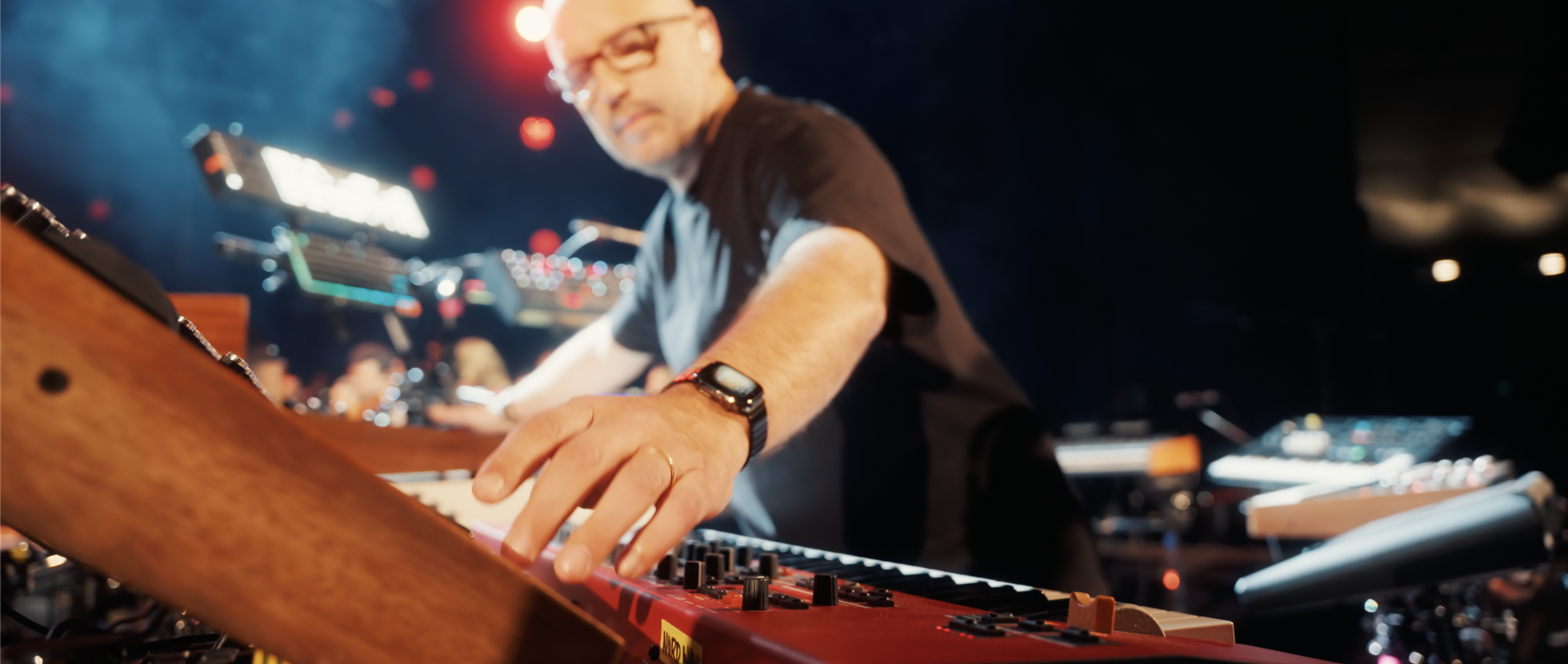
“Taktwechsel”
What was the basic idea behind “Taktwechsel” and what did you want to convey or reveal with it?
The documentary “Taktwechsel” brings together a wide variety of different parties. It's a melting pot of musicians, composers and decision-makers from the music and events industry.
Interests and expectations collide – and all within a very compressed time frame.
We wanted to lift the curtain before the suits were ironed, the pages oiled and the stage lights turned on.
Faced with the challenge of creating a creative masterpiece after four days of intensive rehearsals, we show what it really takes to get the first note just right.
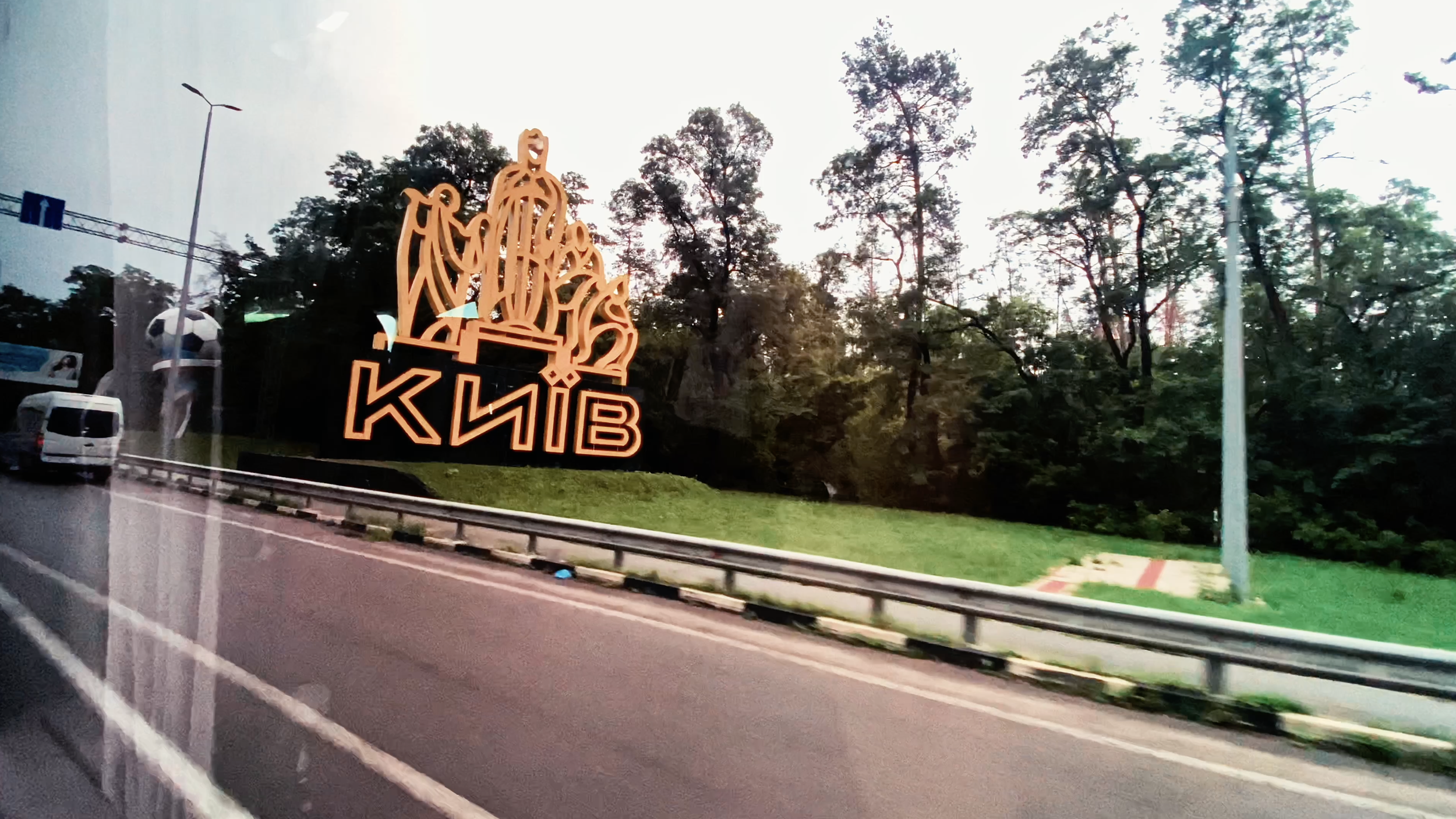
“Berlin Kyiv”
Berlin Kyiv: How did you envision this journey cinematically before you set off — and what changed along the way?
Our goal was to capture the journey as authentically as possible. We didn't want to portray distorted truths. We wanted to capture everything as it really happened.
An artist in wartime Ukraine.
That hadn't been done before, so we freed ourselves from everything and let the country work its magic on us.
What we didn't expect was that we would capture so many profound encounters with people.
The entire documentary could have ended up being over two hours long because so much happened. What particularly impressed or moved you on your trip to Ukraine?
The conversations with the Ukrainians in particular. Hearing about their experiences first-hand was a formative experience.
The positivity with which some traumatic experiences were described is astonishing. Our own problems at home now seem very small.
Were there any moments that left a lasting impression on you?
When we first set foot on Ukrainian soil in the middle of the night. We had to go through a railway underpass, and at that time of night there were a surprising number of people gathered there.
This was due to the bomb alert that had gone off shortly before. Experiencing something like that so close up was pretty intense.
The whole setting was just right. It was the middle of the night, dark, pouring rain, and a soldier accompanied us to the hotel. We'll never forget that.
Was there an encounter or scene during the filming of Berlin Kyiv that particularly moved you?
We interviewed a few people at the club in Lviv, including a young man, probably in his late twenties, so our age.
He told us that this was his only day off from the front. For him, it was hell.
He just stared into space and seemed completely absent. After that, we had to stop the interviews for the time being. We were shocked and his words clearly affected us deeply.
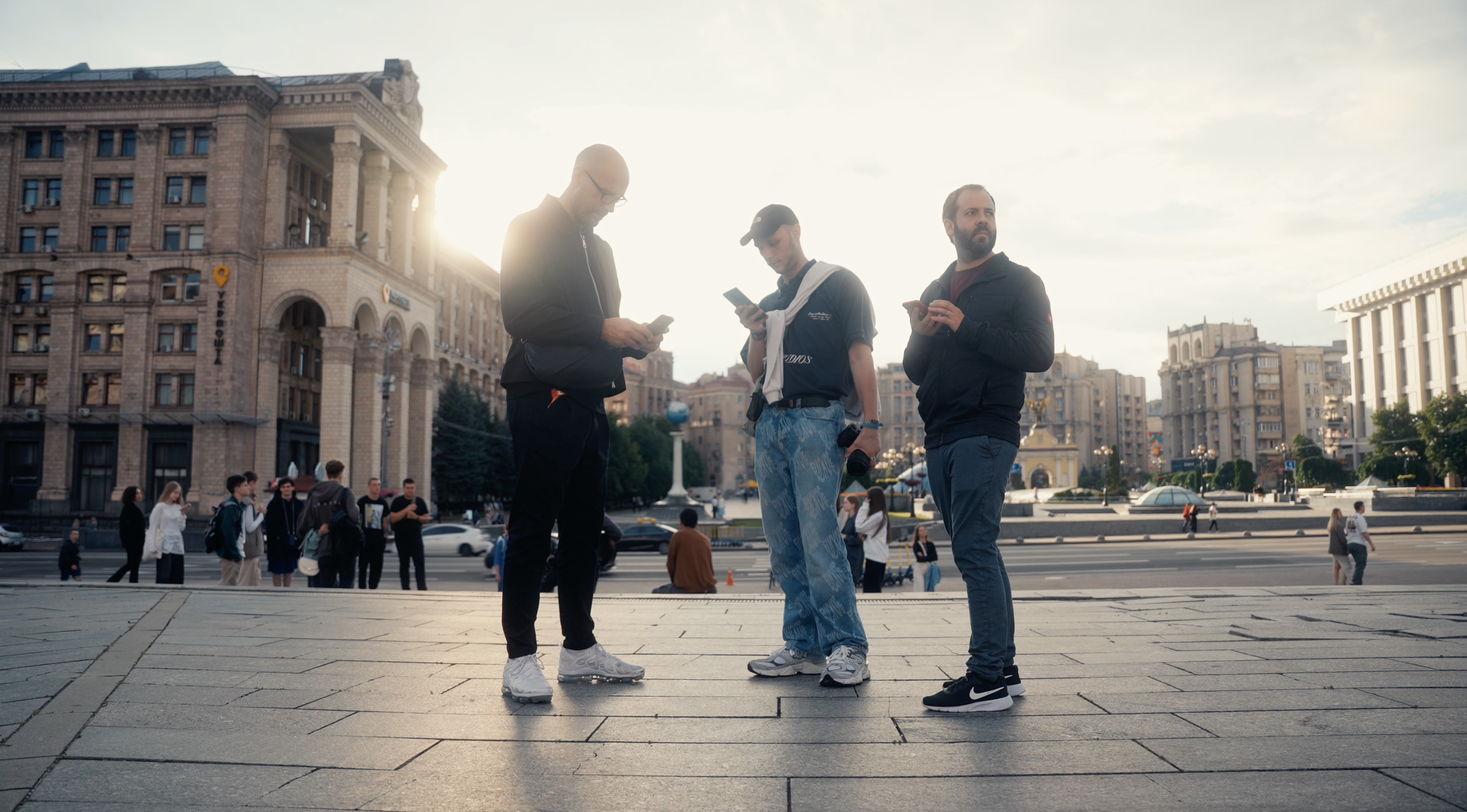
“Berlin Kyiv”
How did you capture the atmosphere, the people and the emotional situation on the ground without commenting on or judging it?
We were observers. Sometimes from a distance and sometimes up close. The local people and the country itself should tell the story.
And despite the ongoing bombings, power cuts and food shortages, Ukrainians are by far the warmest and most positive people we have encountered in a long time. We were able to capture that, and we are particularly grateful for that.
What do you personally and artistically take away from these two projects (“Berlin Kyiv” and “Taktwechsel”) for your future work?
Always be open to new people, experiences and places. Those who close themselves off to this will never experience true beauty. Because this beauty often lies in the things that are not obvious.
A big thank you to Christopher for taking us on his journey and sharing the experience with us.